 Chris
McDonnell, UK
Chris
McDonnell, UKchristymac733@gmail.com
Chris
McDonnell, UK
christymac733@gmail.com
Previous articles by Chris Comments welcome here
January
30, 2019
The
cult of clericalism - we look after ourselves
When we come to discuss clericalism, confusion of language can give rise to many problems. Our common sharing, both priests and laity, of Baptism is the first calling that unites us all. How that is ultimately lived out and experienced marks the individual journey that we must take.
Our recognition of clergy as a defined group has become confused with our appreciation of priesthood, that 'royal priesthood' we all share, 'a priest like Melchizedek of old'. We need to ask questions relating to our perception of priesthood within community. Trust can only be built on experience of reality and it is trust has been severely shaken in recent years. How do we repair the damage done to the Church?
I would suggest that it is not about ‘them’ and ‘us’. Too easily (and understandably) the laity have laid the blame on the ordained clergy when in fact we should recognise that membership of the Church is inclusive; those not ordained need to ask a few questions of their own behaviour - how did we let this happen? What brought the abuse scandal into the public domain? When honesty overcame acquiescence, talking began.
Partly it was due to the cult of reverence for the clergy of the ordained. They were trusted without hesitation. Clericalism grew in a protective atmosphere, one looking after the other.
Maybe it is in the Seminary formation that we should seek out the roots of clericalism; there are certainly questions that we cannot avoid asking. Such questions relate to the detail of selection procedures to enter, the age of entry and the nature of the experience over the years prior to ordination.
Within the Seminary more emphasis is now placed on human formation, with an honest attempt to test the suitability of those following a journey of discernment. Where there are concerns, of whatever nature, then there is a responsibility to voice them for the benefit of all, none more so than the seminary student himself. After these years of 'process' the young priest emerges to the experience of work in a parish. Seamus Heaney describes one such priest with these words.
"I saw a young priest, glossy as a blackbird,
as if he had stepped from his anointing
a moment ago; his purple stole and cord
or cincture tied loosely, his polished shoes
unexpectedly secular beneath
a pleated, lace-hemmed alb of linen cloth.
In the experience of being 'set aside' lies the root of the clerical club we label clericalism. People come to believe the expectation that is placed on them and so live up to such expectations. Within this closed cultural circle, protectionism flourishes. A chorus line from one of Springsteen's songs comes to mind.
"We
take care of our own
We take care of our own
Wherever this flag's flown
We take care of our own"
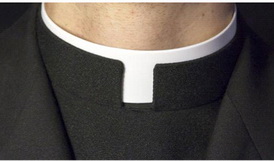
It comes not only with the singular way of life but in the honorifics, forms of address and the dress code that provides the hiding place for the insecurity of some. There are those priests who are never seen without their collar and cassock - a line of demarcation is drawn that it is hard to cross.
It is this 'otherness' that must be the focus of our examination. How has it come about and what continues to encourage it? Being an ordained priest should be about service, not status. Arrival in a parish might be new for the priest but he should always remember that he comes to serve an existing community, one that has roots and heritage, a life that goes back many years.
We have been told in no uncertain terms where Francis stands on clericalism. Speaking during a homily in Casa Santa Marta in December 2016 he said
"There is that spirit of clericalism in the Church that we feel: clerics feel superior; clerics distance themselves from the people. Clerics always say: ‘this should be done like this, like this, like this, and you - go away!’" It happens "when the cleric doesn’t have time to listen to those who are suffering, the poor, the sick, the imprisoned: the evil of clericalism is a really awful thing; it is a new edition of this ancient evil [of the religious ‘authorities’ lording it over others]." But "the victim is the same: the poor and humble people, who await the Lord."
His position is clear; he will have none of it. For him it is a prime source of damage within the Christian community.
The Christian Church has a future to look forward to in spite of our evident failings. When the map has been misread on a journey it is time to pause, look again and re-set the compass. The gathering of Bishops with Francis in Rome this February is an important part of this process.
END
[This is an edited version of a longer article published in the Dominican Journal SPIRITUALITY this month]