 Chris
McDonnell, UK
Chris
McDonnell, UKchristymac733@gmail.com
Chris
McDonnell, UK
christymac733@gmail.com
Previous articles by Chris Comments welcome here
Feb
13, 2019
A movement for change, Bauhaus years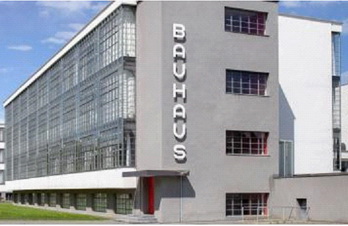
Another centenary to mark this year, one hundred years since the founding of the Bauhaus in Germany. The School existed in three German cities: Weimar from 1919 to 1925, Dessau from 1925 to 1932, and Berlin from 1932 to 1933. They were the years 'between the wars' when Europe, shattered by the conflict of the Great War, was soon to be overtaken by the rise of Fascism with a Second War the inevitable outcome.
The Bauhaus movement was a sparkling gem during dark days.
Established at Weimar under the leadership of Walter Gropius the artists and craftsmen who gathered together looked for a clean line and functional design across a whole range of experiences from chairs and furniture to buildings and posters. By looking afresh at tired patterns they created something new that even though the Bauhaus finally closed in 1933 profoundly influenced the architecture and design of the 20th Century.
In fact, the closure of the Berlin Bauhaus in 1933 spread the seeds of new ideas far and wide. With the approaching war many of the artists left Germany, taking with them the experience of their brief years together. The Bauhaus had a significant impact on art and architectural trends in Western Europe, the United States, Canada and Israel in the following years. In fact, in 2004 Tel Aviv was named to the list of world heritage sites by the United Nations due to its abundance of Bauhaus architecture in the city. Some 4,000 Bauhaus buildings were erected from 1933 onwards, low rise but designed in an industrial unit fashion, efficient and uncluttered.
The re-examination of design in such a purposeful manner is reflected in the post-conciliar Church in so many ways. John XXIII spoke of 'opening the windows'. That action has two consequences. The stale air of a closed room can be changed and the opened window allows for a fresh look at the scene beyond. And change in the 60s came at a rapid pace. There was excitement in the air and a newness of spirit in abundance.
The Fathers of the Council and the many theologians and writers around them spoke with hope and joy as the dust cleared and the sunlight shone through. Just as the Bauhaus artists took their story of clean design and efficient functionality across Europe and to the US and elsewhere so the message of the Council was shared.
The centrality of the Eucharist in Christian belief was reflected in the design of new churches centred round the altar, those sharing in the celebration gathered round a common table rather than as spectators seated in a long nave. The materials used reflected the time, with concrete, steel and plastics having a place. The stained glass imagery of earlier years was transformed by the thick slabs of coloured glass that Piper designed to give glorious light in the Cathedral of Christ the King in Liverpool. The elaborately decorated vestments that had been common place gave way to simple clean dignified designs without clutter.
There was a challenge in the air, a challenge that asked questions. Was our faith grounded in a belief in our experience of the Lord or were we confused by the challenge of ephemeral decoration? For some, maybe for many, this was a hard bridge to cross. Hard also for religious whose particular clothing identified who they were. Changing the style and appearance of their habits wasn't easy. But who you are is not to be confused with how you look. Some retain their traditions to this day, whereas others have moved on.
Maybe a common thread in all of this is simplicity, what our signs and symbols say to others, how others recognise us for who we are. Thomas Merton was often seen in denim jeans and a work shirt, pen in hand or typing at his table.
Just as those who gave spirit to the Bauhaus movement did not always get praise for their efforts so too have those who have had the courage to write, speak and be in these recent years been challenged. Teaching is not just about giving well-rehearsed answers, it is a matter of facing up to difficult questions and often asking a question by way of response.
Young children expect answers from grown-ups and sometimes seem perplexed when the answer is 'I don't know' or 'I'm not sure'. So too we must not expect the Church to have all the answers, neatly filed away for distribution at the appropriate time. The importance of the question is that a door is opened and that with the help of others, we can explore the options.
Each question is a prism that divides white light into its colours that we may appreciate it with ever-growing wonder.
END
=============