 Chris
McDonnell, UK
Chris
McDonnell, UKchristymac733@gmail.com
Chris
McDonnell, UK
christymac733@gmail.com
Previous articles by Chris Comments welcome here
Feb
20, 2019
A
cinder-block home
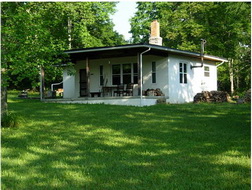
I make no apologies for returning to some words on Thomas Merton whose 104th birthday we marked at the end of January. A monk of the Abbey of Gethsemani in Kentucky, he finally received permission to move to a cinder-block hermitage in the grounds of the Abbey, his home for the final years of his life in the mid 60s.
Awhile back I wrote a sequence of pieces that were reflections on his own words related to his solitary home. I would like to share some them with you this week. Merton recorded that "There is a great need for discipline in meditation. Reading helps, the early morning hours are good, though in the morning meditation, I am easily distracted by the fire."
I wonder what it was like to wake in the early hours of a late October morning, in this wilderness of dreams?
'Surrounded by trees of a late October dawning where early morning silence lies undisturbed about the house
Seated alone in a Shaker chair by an open fire
Words of morning psalms go out beyond the cinder blocks
of this solitary room as day breaks split dry wood burns
with orange flame to grey flaked ash. Here in a Kentucky Autumn another day begins in this wilderness of dreams'.
He mentions that he was easily distracted by the fire yet that same fire crackled and burned in the grate as he reflected on another day breaking.
Merton was a writer of books and poetry and a correspondent with many. He tells us that "It is not much fun to live the spiritual life with the spiritual equipment of an artist".
The cover image of his Collected Poems shows a smiling man in a denim jacket, pen in hand. That turned my thoughts to the three aspects of his vocation.
'Blue-denimed Poet, white-clothed Monk, priest, man, writer
whose words once woven from the debris of our experience speak still beyond the shores of an adopted land.
Poet, priest, man at the margin of our existence.'
A marginal man, looking on, but to what effect! His words were delicate yet sharp, engaged with the reality of the world about him, whether it was the issue of civil rights or the morality of nuclear weapons, his voice was heard beyond his Kentucky home. In fact his Cistercian Order banned him from publication of material on nuclear arms which he neatly circumvented by sending articles to friends for them to distribute further. They became known as The Cold War Letters.
Central to everything that Merton wrote was his life in prayer. Writing about the reality of his hermitage, he offered these few words.
"In the hermitage, one must pray or go to seed.
The pretence of prayer will not suffice, just sitting will not suffice. It has to be real. Yet, what can one do ?
Solitude puts you with your back to the wall or your face to it, and this is good. So you pray to learn how to pray".
In his hermitage he had a small chapel. Hung on the wall by the tabernacle were a couple of icons. His need to pray was evident; it was the source and strength of all he did.
'Facing the icon wall grey blocks of stone coloured
by the infusion of the spectral dance hand-painted
images of significance.
There in the silence of the early Dawn
words quietly spoken told again the Cross.
Sun burst on the tabernacle box
This broken bread and chastened cup
of the Risen Christ. Prayer time alone.'
He relished the solitude of his home, surrounded by trees and grassland spaces. On one occasion he comments that "This is everything that a September day ought to be. Brilliant blue sky, kind sun, cool wind in the pines."
He sang a story that came from his heart, came from where he worked during the day, walked in the woods, read and wrote and finally lay down to take his rest in sleep.
'Christ of woods of trees and forest
Christ of leaves of darkness and damp
Christ of sunrise of dawn and mist morning
Christ of brightness of noontime and warmth
Christ of evening of sunset and stillness
Christ of space between solitude and silence
Christ of emptiness of clearing beyond Other
Christ of inner peace our Being and end.'
How he managed to do so much in the 27 years of his monastic life is a marvel in itself. Apart from the books and articles, his published correspondence runs to five significant volumes. Not a matter of short, chatty letters but dealing with significant issues. He certainly understood the art of making use of every moment.
When our prayer time is difficult, remember Merton's words. So you pray to learn how to pray.
END
====