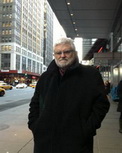
 Chris
McDonnell, UK
Chris
McDonnell, UKchristymac733@gmail.com
Chris
McDonnell, UK
christymac733@gmail.com
Previous articles by Chris Comments welcome here
March
20, 2019
The
days of March
We
are living in difficult times, caught either side of the Ides of March,
the 15th day of the Month. That was the date when a seer warned Julius
Caesar not to attend the Senate.
Now
in different circumstances, our own political life is under great stress.
Challenge and confusion have dominated the headlines. I have no doubt that
by the time these few words are published, the scene will have changed yet
again. From one day to the next our options alter. How have we reached
this ridiculous impasse? I don’t intend to argue the politics of this
mess but I would suggest that one of the underlying causes of this debacle
has been a lack of our listening to each other.
From
that fateful day in June 2016 when the Referendum result was declared,
narrowly in favour of leaving the EU, entrenched positions have been taken
and barricades erected. Listening to each other has become a rarity. It
raised tensions within communities and has in succeeding months become a
burden on our national life.
But
to return to our lack of listening to each other. We hear a lot of noise
from so many sources but that is not the same as listening to each other.
Sometimes that is the fault of confusion in presenting the message,
sometimes it is the fault of the listener who is inattentive.
After
relating the parable of the Sower, Jesus said to those gathered around him
"He who has ears to hear, let him hear." In order to listen we
have to be disposed to hear what is being said.
In
October 2015, when marking the 50th anniversary of the Synod of Bishops,
Pope Francis outlined his vision for a church that is "synodal"
at every level, with everyone listening to each other, learning from each
other and taking responsibility for proclaiming the Gospel. The National
Catholic Reporter continued to record the remarks of Francis with these
words:-
"The
journey of synodality is the journey that God wants from his church in the
third millennium. A synodal church is a listening church, aware that
listening is more than hearing. It is a reciprocal listening in which each
one has something to learn." Referring to the Greek roots of the word
"synod," Francis said, "walking together -- laity, pastors,
the bishop of Rome -- is an easy concept to express in words, but is not
so easy to put into practice."
So
just as we ask politicians to listen to each other, so too Christians have
that same urgency thrust upon them. Listening doesn't apply to some small,
select group but to all of us walking this road of pilgrimage together.
Yet
how often do we fail to live up to the mark, casting aside voices that
would help and inform, nurture and care. Our bishops are so busy with
administration that they often fail to listen to the voice of their
people. Some of our parish priests expect to build community without
reflecting on the reality of the community in which they minister. By now,
it should be mandatory that every parish has a form of council where
reasonable discussion may take place, a table round which all may listen.
The old adage that 'what Father says, happens' is both out-dated and, in
the end, non-productive.
In
Psalm 78, the psalmist tells us that we should 'Listen, my people, to my
teaching; tilt your ears toward the words of my mouth.' The Lord teaches
his people and they should listen to his teaching. Unless that is done
within the context of a community that listens to and cares for each
other, it will be a lonely and arid experience. A while back Francis
talked about a shepherd knowing the 'smell of his sheep'. A graphic
description indeed but one that touches a nerve. That can only come about
if we do in fact listen to each other.
The
turmoil that we face nationally and across nations is reflected in the
structural challenges faced by the Church. Voices not listened to
eventually become tired and frustrated until they become silenced by
default. You have only to consider the head-in-the sand attitude shown by
our bishops to the ever-growing crisis in the priesthood where the option
of examining the option of the ordination of married men is not seen as an
urgent matter demanding attention. Which is a great pity.
In
the political context, the words of Samuel Beckett are ever more pertinent
"Ever tried, ever failed, never mind try again fail better". The
consequences of failure threatens the trust of the people in our
parliamentary democracy. Failure to listen to those who gather round the
table of the Lord may result in an ever-diminishing number of those
seeking with open hands, the Eucharistic gift.
END
====